
Observed — Homepage uses technical jargon without explanation: 'MCP' (Model Context Protocol), 'corpus', 'audit', 'checklist' are not defined for unfamiliar visitors. Example: 'serves a curated UX corpus to coding agents over MCP' assumes knowledge.
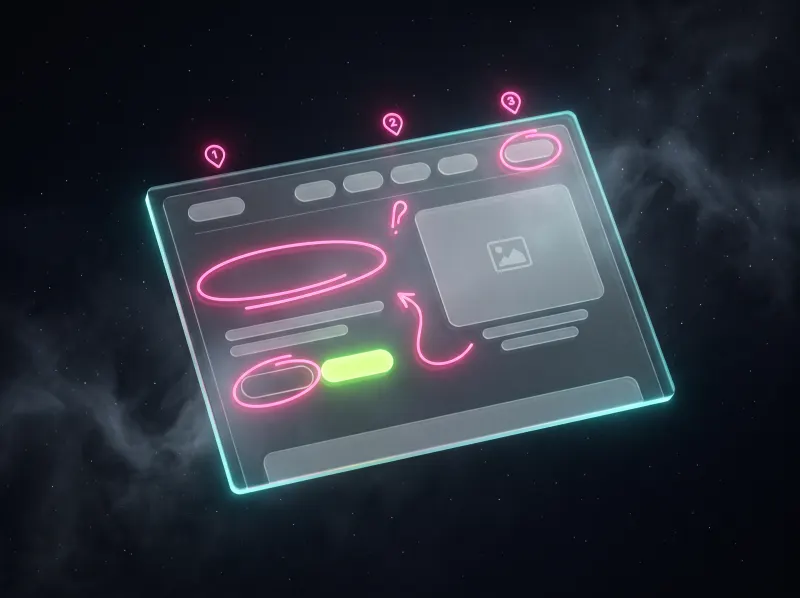
Mark up a website the way a scribe marked a manuscript.
The rubric was the passage a scribe wrote in red so a reader could follow the text. Rubric does that to a page: before launch, and after it.
UX audit
554 rules, up to 7 pages. Findings by severity, each with the fix.
Predicted
Heatmap
Where the eye goes, on desktop and mobile, before launch.
Simulated
Probe
BetaDescribe a visitor. A simulated one tries the page and says where it hesitates.
Analytics
Real visitors, no cookies, and a weekly read of what to fix.
Four parts. Ready for the client report.
Each finding has four parts: the issue, why it matters, what to do, and the references behind it. Paste the issue into a client report; hand the actions to whoever builds the fix.
The page lacks a low-commitment secondary path — only a single primary action with no fallback for visitors who aren't ready to commit yet.
Visitors not ready to act at the primary level have no way to engage; they leave instead of taking any step at all.
- Add a secondary, lower-commitment option beside or beneath the primary CTA — e.g. "Download the brochure", "Watch a short overview", "Request a callback", or "Read client stories" — matched to what the page actually offers.
- Style it as a text link or outlined button so it doesn't compete visually with the primary action.
- Track completion per path so you understand which secondary options actually convert.
Give it a URL. Get back what to fix first.
Map the pages
A discovery pass finds the pages worth auditing. It's part of the audit.
Walk them like a first-time visitor
Behind a login too: you sign in yourself, nothing typed is stored.
Report what fails
Findings grouped by severity, each with the fix. Watch it happen live on the run page.
The same 554 rules, while it designs.
Claude Code and other MCP clients can call the rules while they build. One command, approve in the browser, done.
claude mcp add --transport http rubric https://rubric.design/mcp
/plugin marketplace add things-studio/rubric-plugins
/plugin install rubric-audit@rubric
Plans sized by managed runs.
Audits, heatmaps and Probe we run for you on any client site. Audits your own agent runs over MCP count as calls, not runs. Annual billing: two months free. Every plan has a 14-day no-questions refund.
Free
For using the rules from your own coding agent.
- MCP knowledge and audit tools, 25 calls a day
- The full checklist, every item
- Your agent can save audits and pull reports: every finding’s issue and severity
- No managed runs
Basic
For a freelancer with a few clients.
- About 5 managed audits a month, on any site
- 20 managed runs a month · 1 seat
- Analytics on 1 site, 5,000 pageviews
- 2,000 MCP calls a month
- Impact, actions and references on every finding
Pro
most runsFor an agency team across client sites.
- About 25 managed audits a month, on any site
- 100 managed runs a month
- 3 seats · extra seats $2/month
- Analytics on 5 client sites, 50,000 pageviews
- 20,000 MCP calls a month
Enterprise
For a team with a procurement process.
- Custom run quota · extra seats · invoiced billing · EU-hosted cookieless analytics
Need more? Add 20 runs for $39 or 60 runs for $99.